Bark, woodchip & compost
Mulch Calculator
Enter each bed as length and width — add a second or third for an L-shaped border — and the ticket shows cubic yards, 2 cu ft bags, weight and cost as you type. Switch to metres whenever you need it.
1.9cubic yards
- Cubic feet
- 50 cu ft
- Bags (2 cu ft)
- 25
- Weight (approx.)
- 0.8 tons
- Cost at your price
- —
Free, no sign-up and no email — the figures are worked out in your browser, so nothing you type is sent to us.
Mulch is sold by volume and bought by the bag, and the bag is where most people lose the plot. A bed that looks small on the plan turns out to need twelve bags, and a bed that looks huge needs two yards of bulk mulch for less money than six bags.
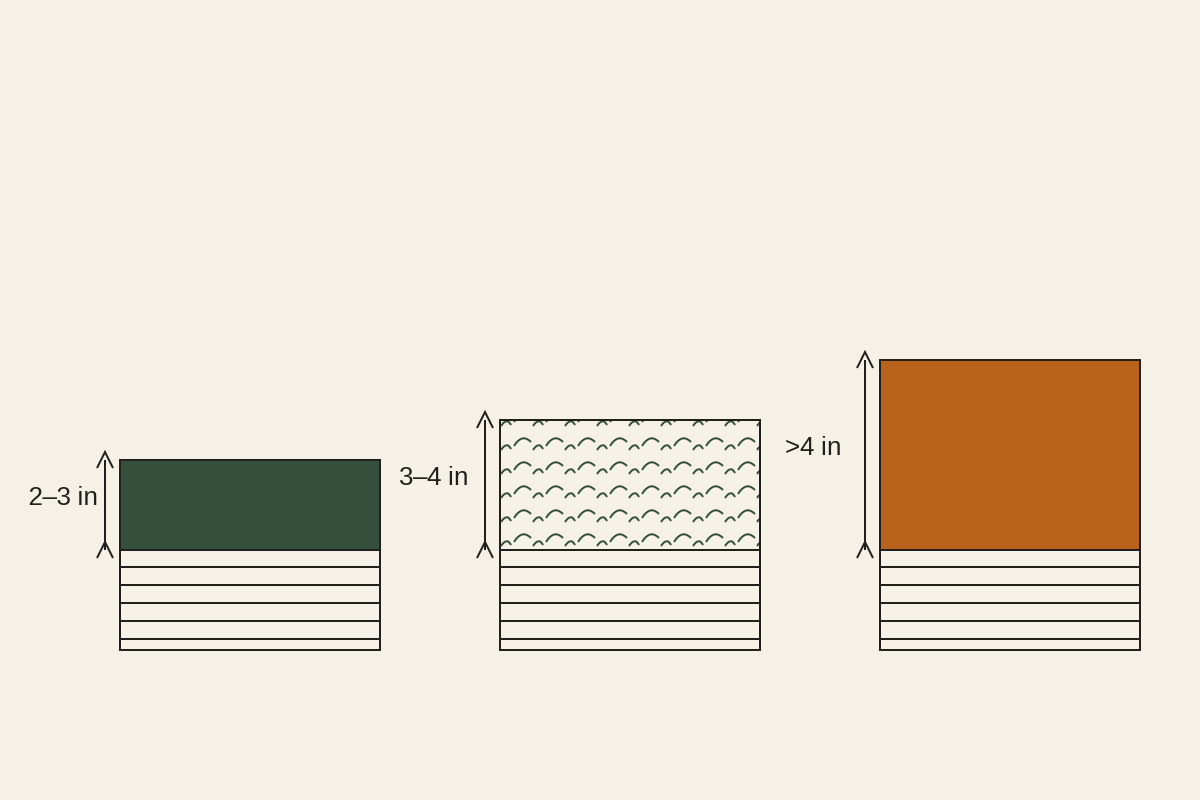
The difference is depth. Two inches and four inches of the same mulch are twice the material, and both look reasonable in a photo.
How the mulch calculator works
The calculation is the same one used for any loose material: area times depth, then convert to the units the garden centre sells in.
- Cubic feet = length (ft) × width (ft) × depth (in) ÷ 12
- Cubic yards = cubic feet ÷ 27
- Bags (2 cubic feet) = cubic feet ÷ 2, rounded up
How do I add several beds?
For an L-shaped, stepped or curved bed, do not run the calculator three times by hand. Press Add another area and enter each patch inside the same calculator: the areas are added before anything is converted, so the bag count and the tonnage are already totals. For a curved border you cannot easily measure with a tape, tick I already know the total area and type the square footage straight in. Round the final bag count up — a part bag is a whole bag at the till.
Can I switch to metric?
The calculator works in either measurement system. The ft / in and m / cm buttons switch every field at once, and the ticket follows: cubic metres, litres and tonnes instead of cubic yards, cubic feet and short tons, with bag counts in 50 litre bags rather than 2 cubic foot ones.
How deep should mulch be?
| Where it goes | Depth | Notes |
|---|---|---|
| Established planting beds | 2–3 in | annual top-up |
| New beds over bare soil | 3–4 in | over landscape fabric or cardboard |
| Around trees and shrubs | 2–3 in | keep clear of the trunk |
| Vegetable and annual beds | 1–2 in | easier to plant through |
| Garden paths | 3–4 in | over weed barrier |
| Weed suppression | 3–4 in | less than 2 in lets weeds through |
Does existing mulch count toward the depth?
Two things matter more than the exact number. First, total depth: piling new mulch on old year after year builds up a layer that sheds water instead of soaking it, so two to three inches total is the target, not two to three inches each spring. Second, keep mulch a few inches away from trunks, stems and house siding — piled against them it holds moisture where you do not want it.
Bags or a bulk delivery?
A cubic yard is 27 cubic feet. In 2 cubic foot bags that is 13.5 bags to the yard.
- Bags make sense for one or two beds, for filling gaps, and for anyone without space for a pile in the drive.
- Bulk bags deliver a cubic yard in a woven sack that can sit on a driveway and be emptied where you need it.
- Loose delivery by the yard is the cheapest per yard once you need two yards or more, but check the delivery fee and whether the truck can reach the bed — a driveway dump means moving it all in a wheelbarrow.
A wheelbarrow holds roughly 6 cubic feet, so one cubic yard is about four and a half barrow loads. That is worth knowing before you order six yards for the back garden.
When to order
Spring is the usual time, before the beds fill in and while the ground is still bare. A thin refresh in autumn also works and often gets a better price. Either way, mulch settles and fades, so the depth you spread is the depth you get — run the calculator on the finished depth and add a bag or two rather than coming up short.
Feeding the soil rather than covering it? The soil calculator handles topsoil, garden soil and raised-bed mixes. For paths and drives, the gravel calculator runs the same volume maths with bags and weight set for stone.
Compare the cubic yard calculator for conversions, the gravel calculator for driveways and soil calculator for planting fill.
Frequently asked questions
How many 2 cu ft bags of mulch are in a cubic yard?
A cubic yard is 27 cubic feet, so it takes 13.5 bags of 2 cubic feet to make one cubic yard. Buy 14 bags if you cannot get bulk and want a full yard.
How much area does one cubic yard of mulch cover?
At the usual 3 inches, one cubic yard covers 108 square feet. At 2 inches it covers 162 square feet, and at 4 inches 81 square feet. Divide 324 by the depth in inches for any other depth.
How deep should mulch be?
Two to three inches on established beds, three to four on bare soil or where weeds are the problem. The total depth matters more than the yearly amount: keep it under about four inches so water still reaches the soil.
What is the difference between bark mulch, woodchip and compost?
Bark mulch lasts longest, two to three years before it breaks down, and is the usual choice for ornamental beds. Woodchip is cheaper and breaks down faster. Compost is a soil amendment rather than a mulch and is best used as a thin layer or dug in.
How much does a cubic yard of mulch weigh?
Roughly 0.4 tons, or about 800 pounds, depending on moisture. The tonnage on the ticket is there for planning and for any supplier who quotes by weight; most mulch is sold by volume.
Can I put mulch straight onto soil?
Use the calculator once with the depth you want to reach. Leave the mulch a few inches back from trunks, stems and the house, and do not stack new mulch on a layer that is already four inches deep.