Topsoil, garden soil & mixes
Soil Calculator
Enter each bed or patch as length and width — add a second area for a stepped or L-shaped layout — and the ticket gives cubic yards, 1 cu ft bags, weight and cost as you type. Switch to metres whenever you need it.
0.7cubic yards
- Cubic feet
- 20 cu ft
- Bags (1 cu ft)
- 20
- Weight (approx.)
- 0.9 tons
- Fill dirt (rough range)
- —
- Cost at your price
- —
Free, no sign-up and no email — the figures are worked out in your browser, so nothing you type is sent to us.
Soil is heavier than it looks and sold in more confusing units than any other garden material. The bag says 1 cubic foot, the landscape yard quotes by the cubic yard, and the delivery ticket quotes tons. All three describe the same hole you are trying to fill.
The calculator converts between them so you can compare a pallet of bags with a bulk delivery and see which one actually matches the job.
How the soil calculator works
The volume formula is the same as for gravel or mulch. The difference is the weight and the bag size, which are set for soil.
- Cubic feet = length (ft) × width (ft) × depth (in) ÷ 12
- Cubic yards = cubic feet ÷ 27
- Bags (1 cubic foot) = cubic feet, rounded up
Can I combine areas with different depths?
For a bed with several planting levels, watch one thing: the calculator applies a single depth to every area you enter. Areas at the same depth can go in together — press Add another area and enter each patch, and the total is added before converting. Areas at different depths need a separate run each, because a six-inch layer and a twelve-inch layer are not the same amount of soil per square foot.
Can I enter metric dimensions?
The calculator works in either measurement system. The ft / in and m / cm buttons switch every field at once; the ticket then reads cubic metres, litres and tonnes, with bag counts in 40 litre bags rather than 1 cubic foot ones.
How deep should soil be?
| Where it goes | Depth | Notes |
|---|---|---|
| Raised bed, vegetables and tomatoes | 8–12 in | deeper for roots, shallower for salad and herbs |
| Raised bed, shallow crops | 6 in | lettuce, herbs, radish |
| New in-ground garden bed | 6–8 in | dug into the existing soil |
| Lawn top dressing | 0.25–0.5 in | any deeper smothers the grass |
| Filling low spots and ruts | 1–2 in | settle, then top up |
| Planting a tree or shrub | the root ball | width two to three times the pot |
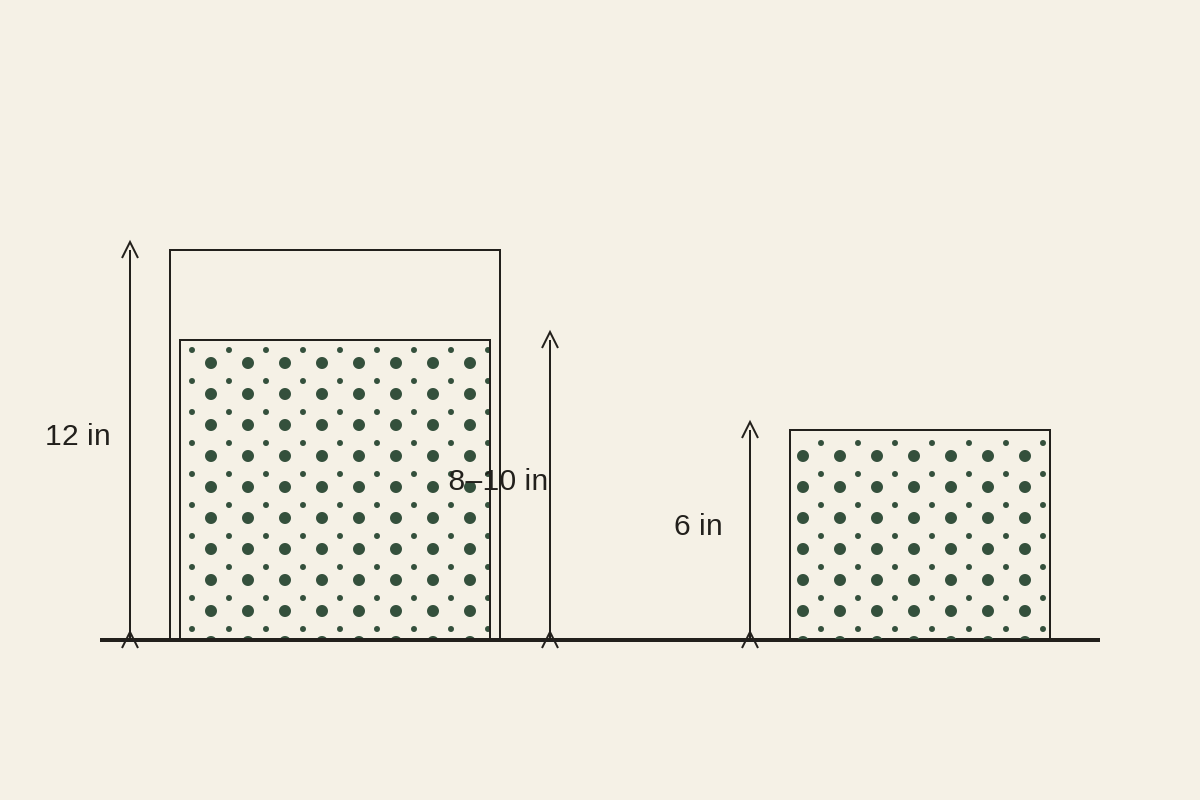
Is frame height the same as soil depth?
For raised beds, the depth that matters is the depth of soil above the original ground, not the height of the timber. A bed built on top of turf with cardboard underneath has less usable depth than the frame suggests.
Soil, topsoil, fill dirt and compost
The words get used interchangeably and they are not the same thing.
- Topsoil is the stripped upper layer of ground, screened to remove stones. It is the cheap bulk option for filling, levelling and lawn repairs.
- Fill dirt is unscreened subsoil — cheap, heavy and low in organic matter. It is for filling holes, building up grades and rough shaping, not for growing anything.
- Garden soil is topsoil blended with compost and often sand or bark, sold for beds. It drains better and holds nutrients.
- Compost is fully broken-down organic matter, used as an amendment — a layer or a mix-in rather than a growing medium on its own.
- Raised bed mix is a blend of topsoil and compost, sometimes with a light aggregate for drainage, sold specifically for filling frames.
For most raised beds a mix is better than pure topsoil, which can be heavy and low in organic matter. Check what you are buying: “topsoil” is a description, not a standard.
Bags or bulk?
A cubic yard is 27 cubic feet, so in 1 cubic foot bags it takes 27 bags to equal one yard.
- Bags work for a couple of raised beds, filling holes and topping up the lawn. They are easy to carry and easy to store.
- Bulk bags give you a full cubic yard on the driveway without a delivery minimum.
- Loose delivery is the cheapest per yard from about one cubic yard up, but a cubic yard of soil is over a ton and a half — get it dropped as close to the bed as the truck can safely reach, because moving it by wheelbarrow is the real work.
Wet soil is noticeably heavier than dry, and bags left in the rain gain a lot of weight. If you are buying bags, stack them somewhere covered.
A note on settling
Freshly delivered soil is loose and will settle by roughly 5 to 10 percent after watering and a few weeks. If a bed must finish level with the frame, fill slightly high rather than exactly level, and keep a bag back. The cubic yard calculator has the feet-to-yards tables for any material. For the same volume maths with other materials, the gravel calculator covers stone and the mulch calculator covers bark and woodchip.
Fill dirt: weight and where it belongs
The fill-dirt weight row uses a rough 1.2–1.4 US tons per loose cubic yard. Moisture and composition can move the actual weight outside this range; confirm the delivery weight with your supplier. Supplier weight guidance.
When should I use fill dirt?
Dirt is a general name for soil. Fill dirt is intended for filling holes or building up grades, not as a planting medium. Topsoil suits surface levelling and lawn repairs; garden soil blends topsoil with compost for planting. Compost improves existing soil rather than replacing a whole fill layer. For structural fill or slopes, ask about compaction and drainage before ordering.
Frequently asked questions
How many bags of soil are in a cubic yard?
It takes 27 bags of 1 cubic foot to equal one cubic yard, because a cubic yard is 27 cubic feet. If a supplier sells 1.5 or 2 cubic foot bags, divide 27 by the bag size to get the count.
How much soil do I need for a 4x8 raised bed?
A 4 ft by 8 ft raised bed filled 8 inches deep needs about 10.7 cubic feet, or 0.4 cubic yards — close to 11 bags of 1 cubic foot. Use the calculator with your own frame size and the depth above the surrounding ground.
How deep should a raised bed be?
Eight to twelve inches is the usual depth for vegetables and tomatoes, and six inches is enough for salad crops and herbs. Below six inches, roots hit the original ground and growth suffers in dry spells.
How much does a cubic yard of soil weigh?
About 1.2 tons, or roughly 2,400 pounds, depending on moisture and how much it has been screened. Wet soil can be substantially heavier, which is why bulk orders are quoted by weight as often as by volume.
How much soil for lawn top dressing?
Half an inch at most, and a quarter inch is usually enough. Deeper than that and you bury the grass rather than feed it; for anything more, use a soil and sand mix intended for top dressing.
Is topsoil the same as garden soil?
Topsoil is the screened upper layer of ground, used for filling and levelling. Garden soil is topsoil blended with compost for planting. For filling a raised frame, a blended bed mix is usually a better bet than either.
How much dirt do I need to fill a hole?
For a rectangular hole, multiply length by width by depth, all in feet, then divide by 27 for cubic yards. A 4 by 4 foot hole 2 feet deep is 32 cubic feet, or about 1.19 cubic yards. For a circular hole, use pi times radius squared times depth, then divide by 27. Measure radius and depth in feet.
Is fill dirt the same as topsoil?
No. Fill dirt is used to fill holes or build up grades and is not a planting mix. Topsoil is the upper soil layer used for surface repairs and planting preparation. Ask your supplier about composition, drainage and compaction requirements.